Throughout its 200-year history, McLean Hospital has been defined by research excellence, marked by a long list of “firsts” in innovation and discovery.
In 1888, McLean became the first psychiatric hospital in the United States to establish basic and clinical laboratories to study the biological roots of psychiatric disorders. Today, McLean maintains the largest neuroscience and psychiatry research program of any private psychiatric hospital in the nation.
McLean is built for research. Evidence-based clinical care is driven by a culture of collaboration between scientists and clinicians. Research at McLean shapes the gold-standard care patients receive every day and deepens the knowledge that informs the next generation of mental health professionals and helps define best practices worldwide.
Yet, despite the extraordinary strength of McLean’s research enterprise, the current funding climate is one of increased uncertainty. Federal research funding has become more competitive, more often delayed, and more vulnerable to changing priorities.
These gaps are felt acutely in neuroscience and mental health research—areas where sustained, long-term investment is essential for breakthroughs that improve patient care. When funding falters, promising lines of inquiry can slow or stall, affecting progress or sometimes derailing it altogether.
“We’re at a time of unprecedented threat to the future of science—and to medical science in particular—at the same time that some of the most exciting progress in neuroscience and psychiatry is occurring,” said Chief Scientific Officer Kerry J. Ressler, MD, PhD.
“At this challenging time, when federal support is uncertain, philanthropy is critical to achieve the next level of evidence-based improvement in psychiatric treatment and intervention.”
Philanthropy Drives Discovery
Philanthropy has always been a powerful way to advance science and accelerate discoveries that transform lives. At McLean, many donors recognize the opportunity to fuel innovation, enable risk-taking, and propel promising ideas toward meaningful impact.
The Rappaport Foundation is a case in point. In 2020, they endowed McLean’s Basic Neuroscience Division and established a chair for its leader. Today, the Jerry and Phyllis Rappaport Center of Excellence in Basic Neuroscience Research unites more than 300 investigators exploring the biological underpinnings of psychiatric disorders.
The Foundation also has invested in future leaders through the Rappaport Mental Health Research Scholar Endowed Fund, which awards critical funds to promising, early-career scientists who are working to attain larger federal grants.
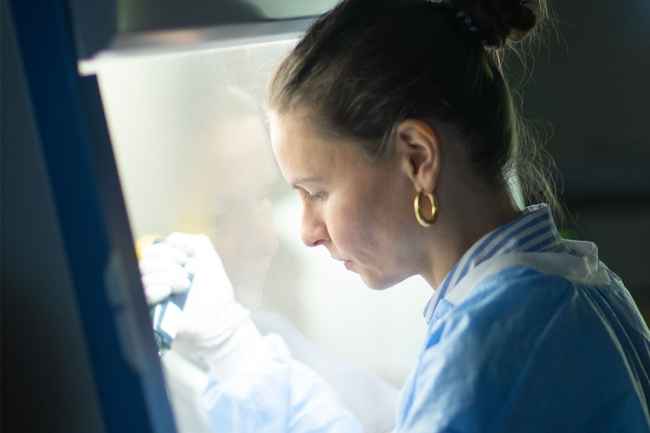
As another example, the Manton Foundation appreciates the importance of postmortem tissue in advancing neuroscience research on a global scale. Their investment in the Harvard Brain Tissue Resource Center at McLean has helped it distribute more than 100,000 human brains.
This unique national resource is vital to unraveling the cellular and molecular pathways that drive psychiatric and neurodegenerative diseases. And today’s delayed and reduced federal funding has put its impact at risk.
“If you want to see progress, you have to first believe in the outcomes and then you have to persevere—that’s true for both the scientist and the donor,” said Margo Cooper who, together with her late mother, Ronna, has been supporting Parkinson’s disease research led by Ole Isacson, Dr Med Sci, and Penny Hallett, PhD, for nearly two decades.
“For us, seeing someone we loved suffer from a brain disorder made us want to do everything possible to find a cure.”
Research is at the core of McLean’s mission—it is the throughline that underpins the hospital’s ability to provide the best clinical care and train the next generation of clinicians and scientists. Donors who support this work take the long view: investing in a future of deeper understanding, more effective treatments, and greater hope.
“We found a team at McLean that has the same goal as we did—to make a difference and to find a cure,” said Cooper. “And neither of us had any illusions that this would take anything less than a sustained effort over many years to reach that goal.”
Some Key Moments in McLean’s Research History
1957 – McLean develops a procedure, adopted worldwide, for extracting and identifying brain lipids. It is key to improved understanding of brain structures.
1960 – McLean becomes the first center for electron microscopy in a U.S. psychiatric institution, providing the ability to view the structure of individual nerve cells in the brain.
1973 – The first Alcohol and Drug Abuse Research Center in a private American psychiatric hospital is launched at McLean, the largest and most comprehensive research facility devoted to the study of addictive disorders.
1988 – McLean develops and identifies diagnostic criteria for borderline personality disorders adopted by the American Psychiatric Association and the World Psychiatric Association.
1996 – Researchers at McLean discover the first evidence indicating a chemical abnormality of nerve-cell function in the brains of people with Alzheimer’s disease, ultimately leading to the first FDA-approved treatments for Alzheimer’s.
2001 – McLean’s Imaging Center opens. This is the third building on campus exclusively devoted to research.
2010 – McLean establishes the Center for Depression, Anxiety, and Stress Research to improve understanding of the psychological, environmental, and neurobiological factors associated with affective disorders.
2015 – A major philanthropic gift enables the purchase and installation of a 3.0 Tesla magnet in the Imaging Center, one of fewer than 20 magnetic resonance scanners in the world of this strength.
2016 – McLean founds the Institute for Technology in Psychiatry to advance psychiatric research and practice through innovations in digital health technology and informatics.
2025 – McLean launches the Metabolic and Mental Health Program to explore metabolic interventions (like diet) as treatment for psychosis, positing that metabolic dysfunction may drive psychiatric symptoms.
To learn more about supporting research at McLean, contact Lori Etringer