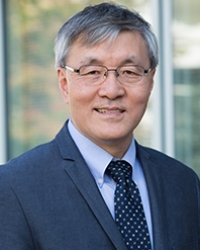
Kwang-Soo Kim, PhD
Director, Molecular Neurobiology Laboratory
- Professor of Psychiatry
Biography
Kwang-Soo Kim, PhD, has over 35 years of experience investigating molecular and developmental neurobiology of the midbrain dopamine neuronal system in health and disease, focusing on elucidating transcriptional mechanisms underlying development and maintenance of dopamine neurons. Based on basic transcriptional studies of midbrain dopamine neurons, Dr. Kim’s lab identified the orphan nuclear receptor Nurr1 as a promising drug target for Parkinson’s disease (PD). Historically considered ligand-independent, Nurr1 has been redefined by the lab’s discovery of synthetic and endogenous agonists that exhibit neuroprotective effects and mechanism-based therapeutic potential—opening new avenues for drug development.
In parallel, Dr. Kim’s lab has been at the forefront of regenerative medicine, pioneering the development of safe, patient-specific induced pluripotent stem cells (iPSCs). To facilitate clinical translation, the lab established an integration-free reprogramming approach through direct protein delivery. More recently, the team uncovered critical insights into metabolic reprogramming during human-induced pluripotency, enabling the generation of safer, more efficient iPSCs optimized for biomedical and clinical use.
Dr. Kim’s Molecular Neurobiology Laboratory, founded in 1998, studies the biology of brain cells that rely on the chemical dopamine to communicate. Major brain disorders such as PD, ADHD, and schizophrenia are related to abnormalities affecting these cells.
Dr. Kim and his group work to identify defective components from these cells—like the orphan nuclear receptor Nurr1, critical for dopamine neurons and inflammation—to understand and reverse the damage. This transcription factor appears to be key to the loss of A9 subtype dopamine neurons of the substantia nigra in PD.
Nurr1 represents a potential drug target for associated human disorders, so the lab is exploring promising drug candidates targeting Nurr1 that could slow PD progression in a mechanism-based and neuroprotective manner. Although Nurr1 is a ligand-independent nuclear receptor, Dr. Kim hypothesizes it may have endogenous ligand(s) and is pursuing identification and characterization of potential endogenous ligand(s).
In addition, Dr. Kim’s lab pioneered the development of safe, patient-specific stem cells using a new technique—a promising breakthrough for treating and studying human diseases. Cell replacement therapies require clinically safe stem cells to generate many (possibly all) cell types. Most iPSCs have been derived using viral vectors and are not ideal for studying or treating human diseases. The lab pioneered the generation of safe human iPSCs via direct delivery of reprogramming proteins.
More recently, Dr. Kim’s lab identified novel mechanisms underlying the reprogramming process through metabolic reprogramming during human-induced pluripotency, enabling more efficient and safer methods to generate biomedically and clinically ideal iPSCs. The lab continues to refine in vitro differentiation of iPSCs into functional midbrain dopaminergic (mDA) neurons and optimize critical transplantation parameters, providing tools for disease modeling and personalized cell therapy.
These innovations culminated in a landmark achievement: the first treatment of a PD patient in 2017 using mDA progenitors derived from the patient’s own fibroblasts and iPSCs.
In 2023, the lab’s Investigational New Drug (IND) application for personalized cell therapy targeting PD received approval from the U.S. Food and Drug Administration (FDA). The team is now partnering with researchers at Massachusetts General Hospital (MGH) to initiate a first-in-human clinical trial—marking a pivotal step toward realizing personalized regenerative therapies for neurodegenerative disease.
Building on transcriptional mechanisms in midbrain dopamine neurons, Dr. Kim’s lab also develops novel, neuroprotective therapeutics for PD and related disorders. Ongoing research explores how inflammation pathways contribute to neurodegeneration and other conditions such as autism.
The lab identified Nurr1 as a key transcriptional repressor of neurotoxic cytokine production, and small molecules enhancing Nurr1 function have been shown to suppress neuroinflammation—highlighting potential treatments for inflammation-related diseases both in and outside the brain.
- Meghan Ahern, Administrative Assistant Senior
- Hyun-Kyu An, PhD, Research Fellow
- Young Cha, PhD, Investigator
- Yean Ju Hong, PhD, Research Fellow
- Heejin Jang, PhD, Research Fellow
- Jeha Jeon, PhD, Investigator
- Woori Kim, PhD, Investigator
- Connor Latona, Technical Research Assistant
- Pierre LeBlanc, PhD, Investigator
- Claudia Lopes, PhD, Investigator
- Sagarika Maitra, Technical Research Assistant
- Eunji Oh, PhD, Research Fellow
- Yeongwon Park, PhD, Research Fellow
- Hannah Ryu, Technical Research Assistant
- Hyemyung Seo, PhD, Visiting Scientist
- Zenith Shrestha, Technical Research Assistant
- Vivian Zhao, Technical Research Assistant
- Sabina Berretta, MD, McLean Hospital
- Vadim Bolshakov, PhD, McLean Hospital
- Bill Carlezon, PhD, McLean Hospital
- Bruce M. Cohen, MD, PhD, McLean Hospital
- Bruno Conti, PhD, San Diego Biomedical Research Institute
- Won Do Heo, PhD, Korea Advanced Institute of Science and Technology, Korea
- Yoon-Seong Kim, MD, PhD, Rutgers University
- Gregory A. Petsko, PhD, Brigham and Women’s Hospital
- Diwan S. Rawat, PhD, University of Delhi, India
Jeon J, Cha Y, Hong YJ, Lee IH, Jang H, Ko S, Naumenko S, Kim M, Ryu HL, Shrestha Z, Lee N, Park TY, Park H, Kim SH, Yoon KJ, Song B, Schweitzer J, Herrington TM, Kong SW, Carter B, Leblanc P, Kim KS. Pre-clinical safety and efficacy of human induced pluripotent stem cell-derived products for autologous cell therapy in Parkinson’s disease. Cell Stem Cell. 2025;32(3):343-360.e7.
Park TY, Jeon J, Lee N, Kim J, Song B, Kim JH, Lee SK, Liu D, Cha Y, Kim M, Leblanc P, Herrington TM, Carter BS, Schweitzer JS, Kim KS. Co-transplantation of autologous Treg cells in a cell therapy for Parkinson’s disease. Nature. 2023;619(7970):606-615.
Kim W, Tripathi M, Kim C, Vardhineni S, Cha Y, Kandi SK, Feitosa M, Kholiya R, Sah E, Thakur A, Kim Y, Ko S, Bhatia K, Manohar S, Kong YB, Sindhu G, Kim YS, Cohen B, Rawat DS, Kim KS. An optimized Nurr1 agonist provides disease-modifying effects in Parkinson’s disease models. Nature Communications. 2023;14(1):4283.
Education & Training
- 1977 BS in Microbiology, Seoul National University
- 1979 MS in Microbiology, Korea Advanced Institute of Science and Technology
- 1983 PhD in Microbial Genetics, Korea Advanced Institute of Science and Technology
- 2011 MS (honorary), Harvard Medical School
- 1983-1985 Post-Doctoral Fellowship in Molecular Genetics, Department of Biology, Massachusetts Institute of Technology