McLean’s School Consultation Service (SCS) empowers schools to meet kids where they are: in the classroom. Recognizing that schools are often a child’s most consistent point of contact, the SCS bridges the gap between clinical settings and everyday learning environments by helping teachers, parents, and staff understand and respond to students’ mental health challenges with knowledge and compassion.
In the SCS model, a team of specialized psychologists works with teachers and staff throughout the academic year, bringing tailored resources and support to each school’s needs.
Drawing on McLean’s multidisciplinary expertise, the team brings evidence-based mental health strategies into daily school life through professional trainings, consultations, and caregiver webinars that build resilience, emotional regulation, and awareness.
“Most kids who need mental health services do not receive them because of systemic and contextual factors,” said Program Director Yudelki Firpo-Perretti, PhD.
“It’s important that we proactively support students and teachers in feeling equipped with strategies that can be used in schools and that align with evidence-based practices like cognitive behavioral therapy (CBT) and dialectical behavior therapy (DBT).”
Tailored Support for Every Community
Now serving more than 48 schools across 20 districts, SCS customizes services for urban, rural, public, and private settings alike. “What presents in a clinical setting often differs from what arises in a school setting, so treatments are adapted accordingly,” said Firpo-Perretti.
Recognizing that learning and social-emotional growth extend beyond school hours, the SCS has expanded into after-school programs and summer camps, bringing essential support wherever children gather.
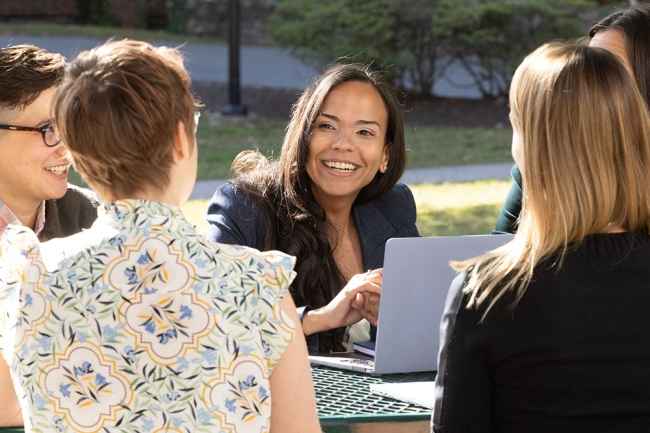
Yudelki Firpo-Perretti, PhD, meets with members of the School Consultation Service team
“At McLean, we have great interventions that people can access by coming to us,” explained Firpo-Perretti. “Our program expands the reach of these interventions by enabling more people to bring these services into their communities.”
This proactive approach doesn’t just fill gaps; it reimagines how mental health care can function in a community. By embedding evidence-based interventions such as CBT, DBT, acceptance and commitment therapy (ACT), and parent-child interaction therapy (PCIT) into school culture, the program ensures that children receive help early, long before a crisis emerges.
Philanthropy Advances Growth
Philanthropy has fueled this progress—expanding the program into more schools and community settings, developing new workshops, and training educators and parents.
Selena Gomez’s Rare Impact Fund is one of several funders helping extend McLean’s reach by supporting SCS in developing culturally sensitive, multilingual mental health resources. Rare Impact also supports a new training rotation for McLean’s child and adolescent doctoral interns, focused on contextually relevant and inclusive mental health practices in schools.
“At Rare Impact, we’re committed to ensuring every young person feels seen, supported, and empowered to care for their mental health,” said Raquel Mata, director of philanthropic partnerships at the Rare Impact Fund.
“Partnering with McLean’s School Consultation Service helps us meet students where they are—in schools and communities—with culturally inclusive tools and compassionate training that break down barriers to care. We’re grateful for their partnership in creating lasting, equitable change for youth mental health.”
The Evelyn Lilly Lutz Foundation, another steadfast partner, shares that commitment. “Kids are struggling; we know that, and we see that,” said Foundation President Suzanne F. Graves, MD. “To us, this program is an opportunity to connect with schools, listen to their needs, and respond where we can.”
Philanthropy turns passion into practice—advancing innovation, expanding access, and offering hope so that every child has the opportunity to thrive. Thanks to the ongoing commitment of McLean’s generous philanthropic partners, the SCS program continues to grow and evolve, delivering vital mental health resources where they are needed most.
This spirit of collaboration and investment in youth mental health promises to create lasting change, empowering the next generation with the tools and resilience they need to succeed both inside and outside the classroom.